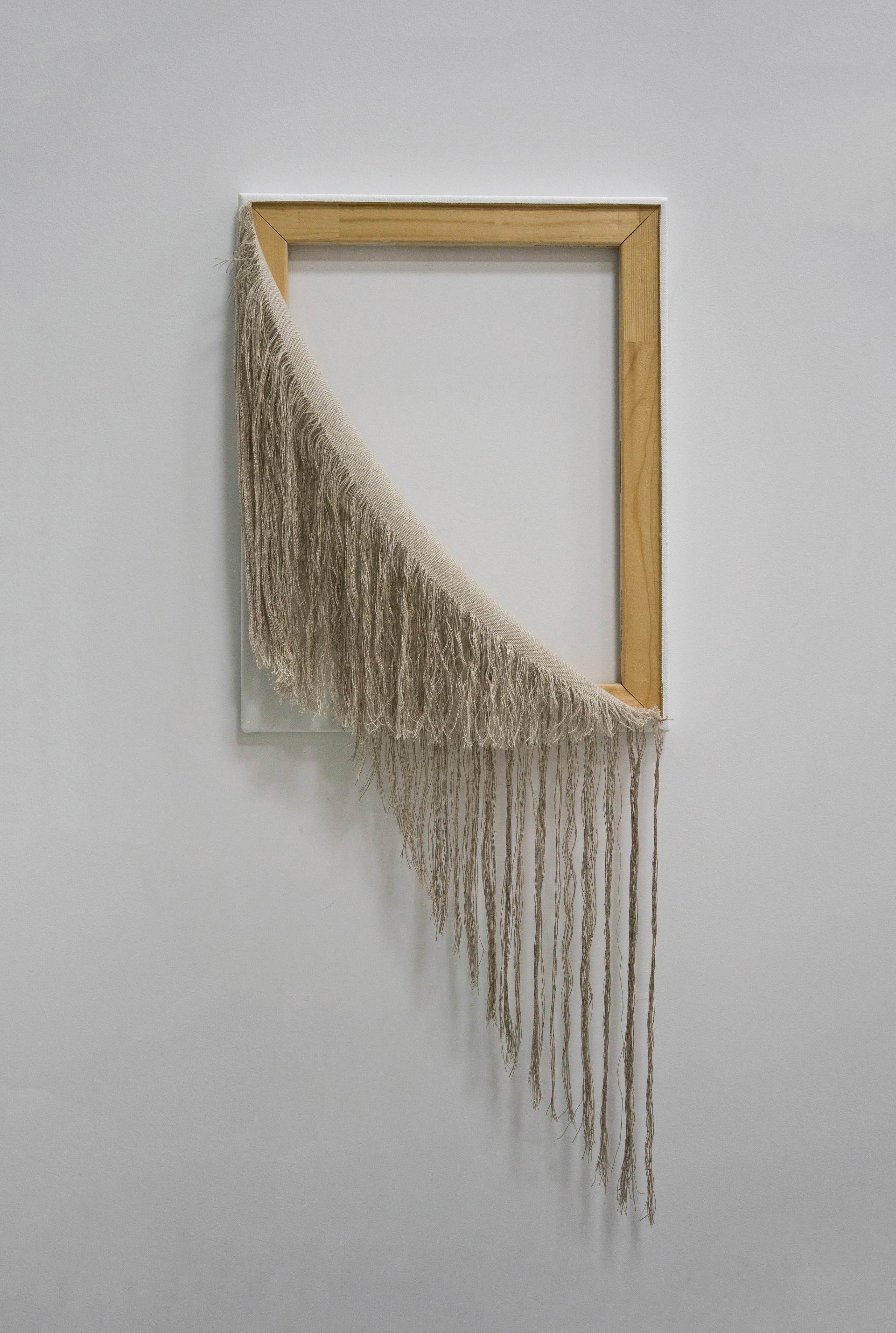
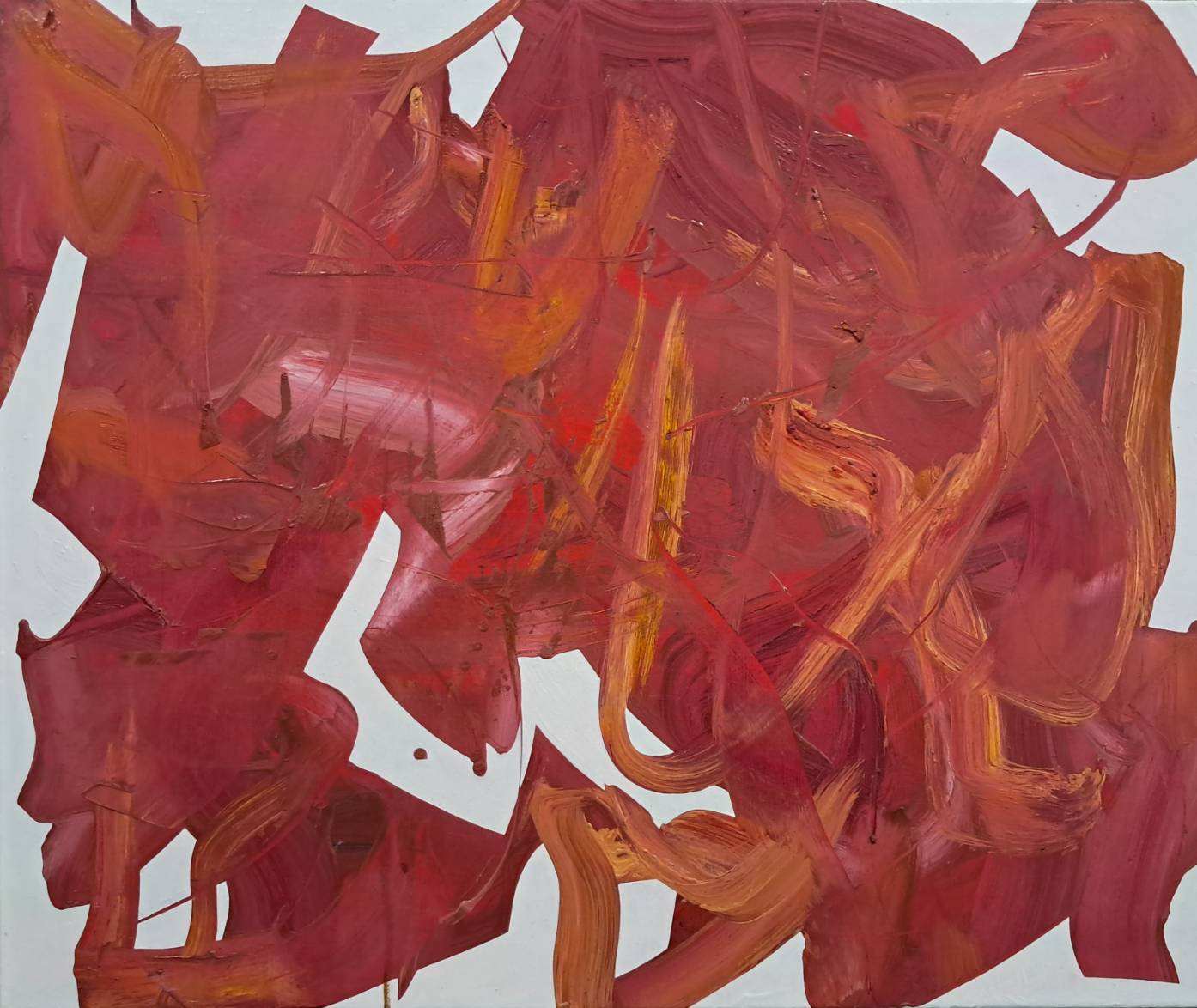
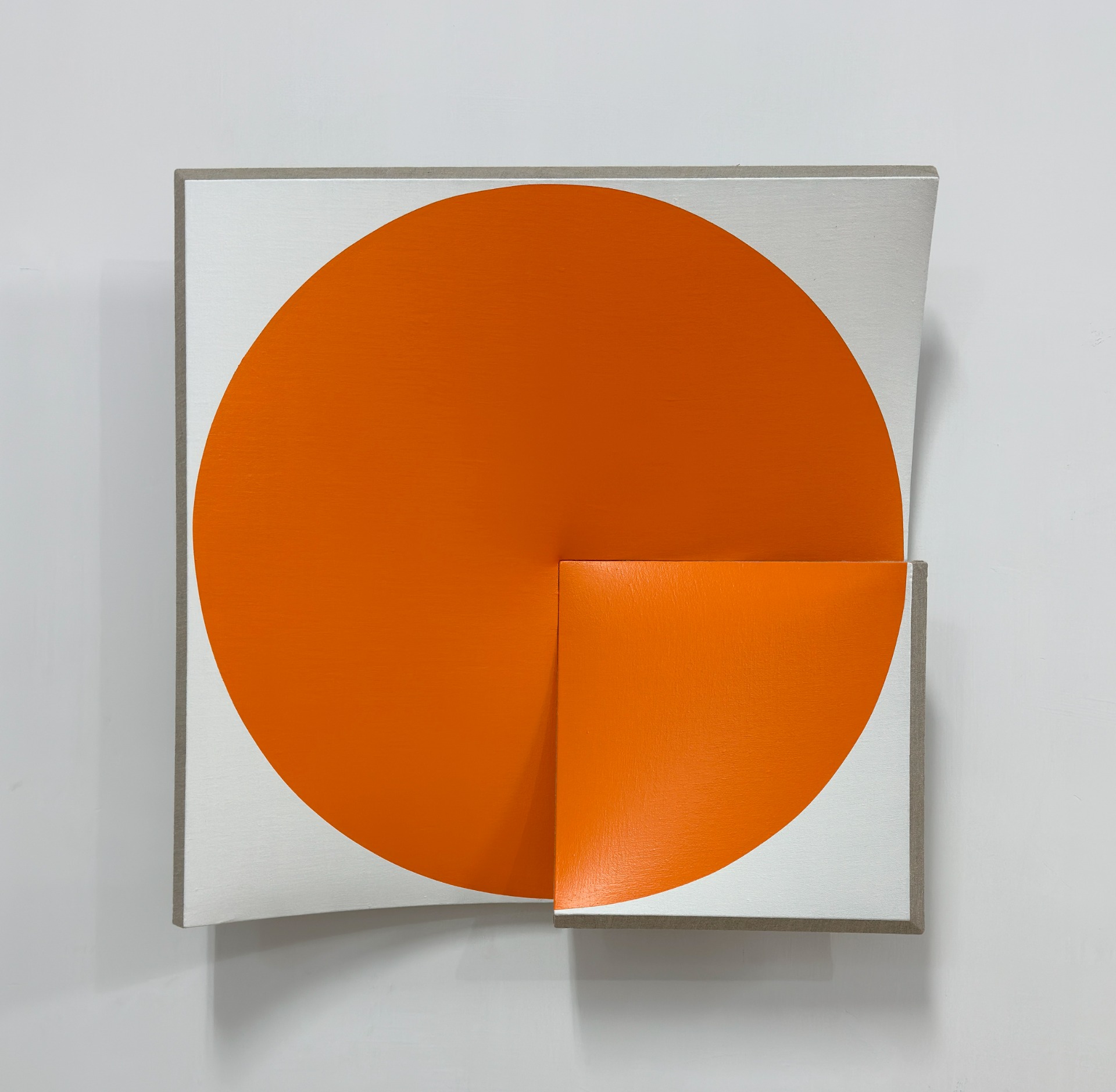
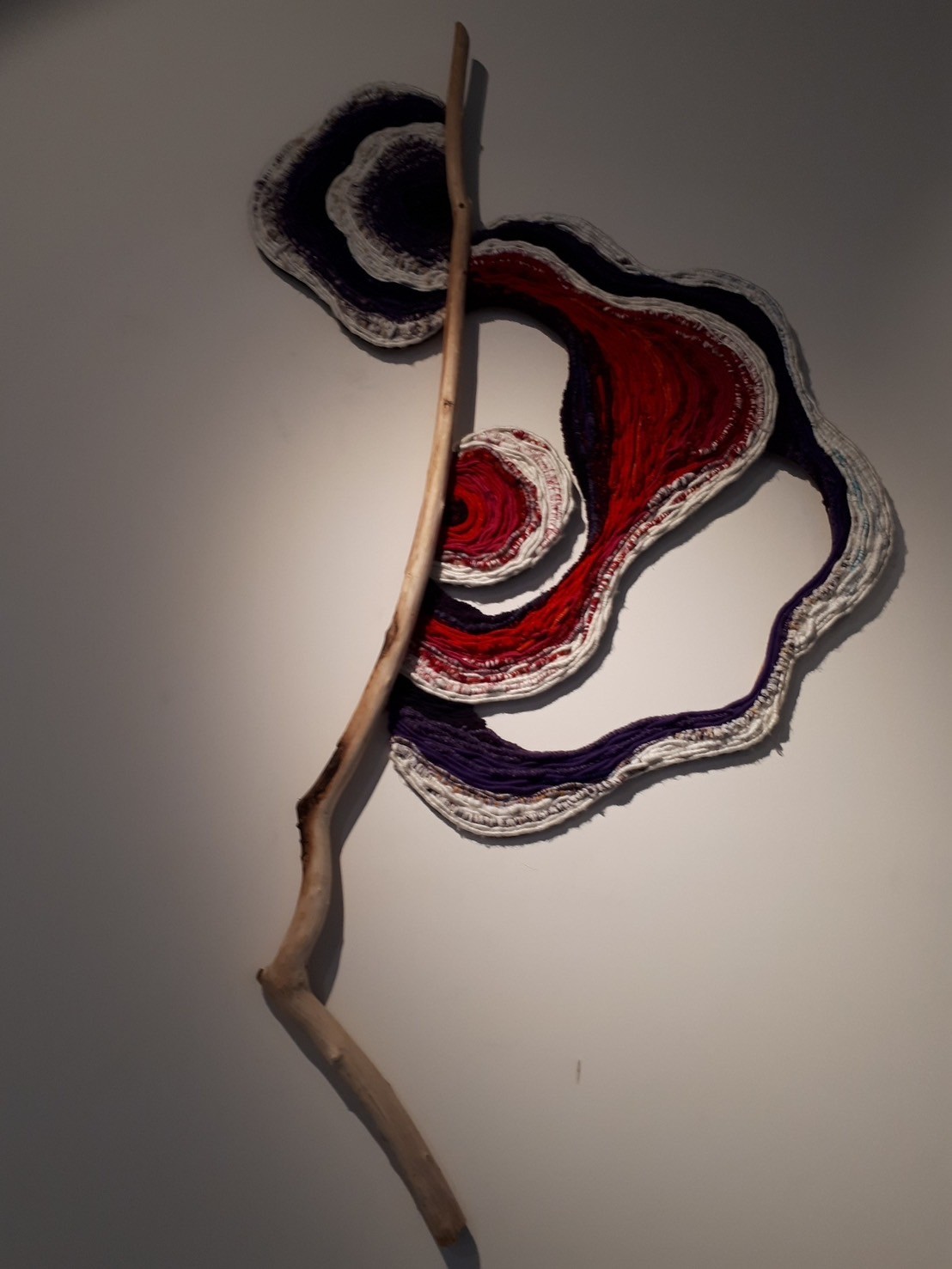
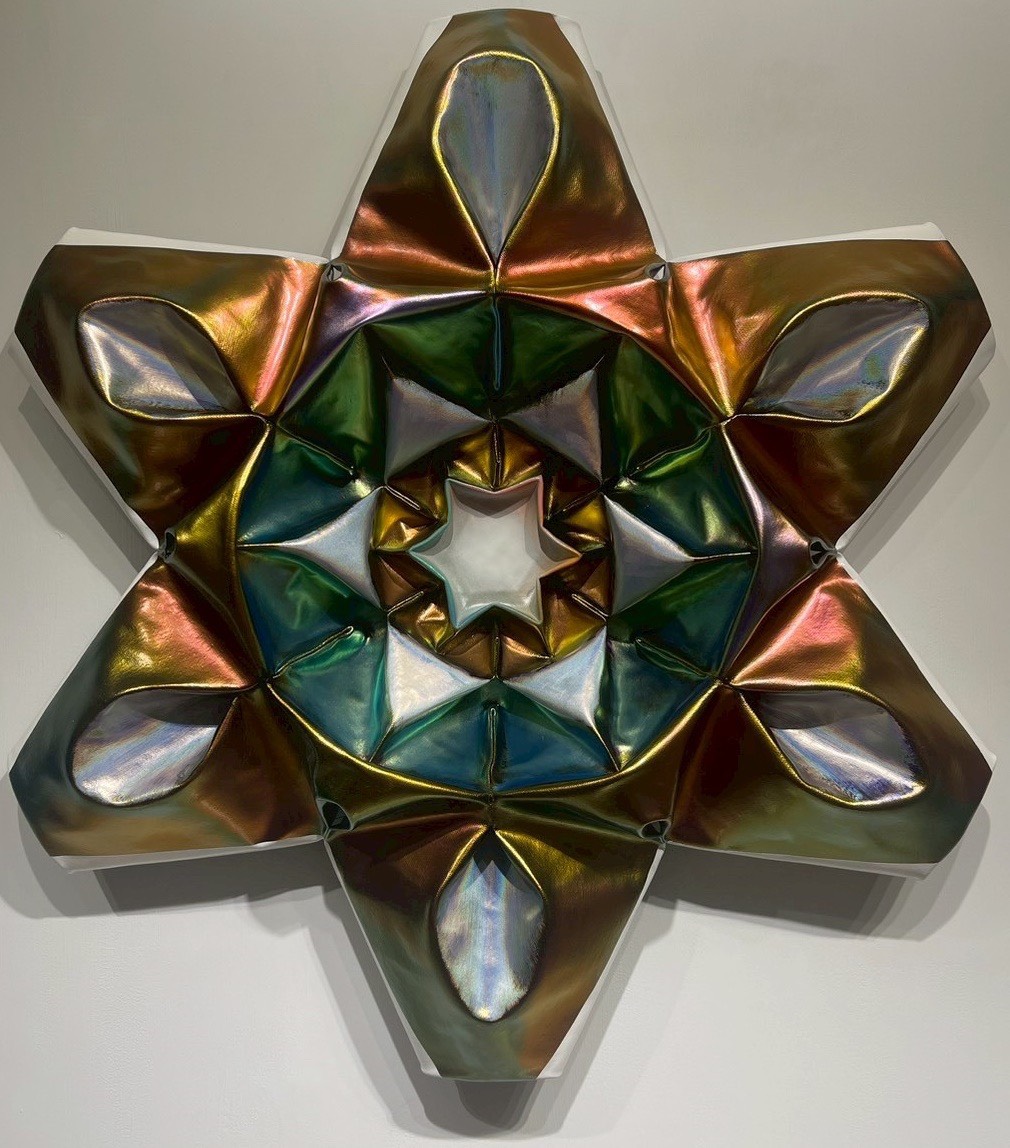
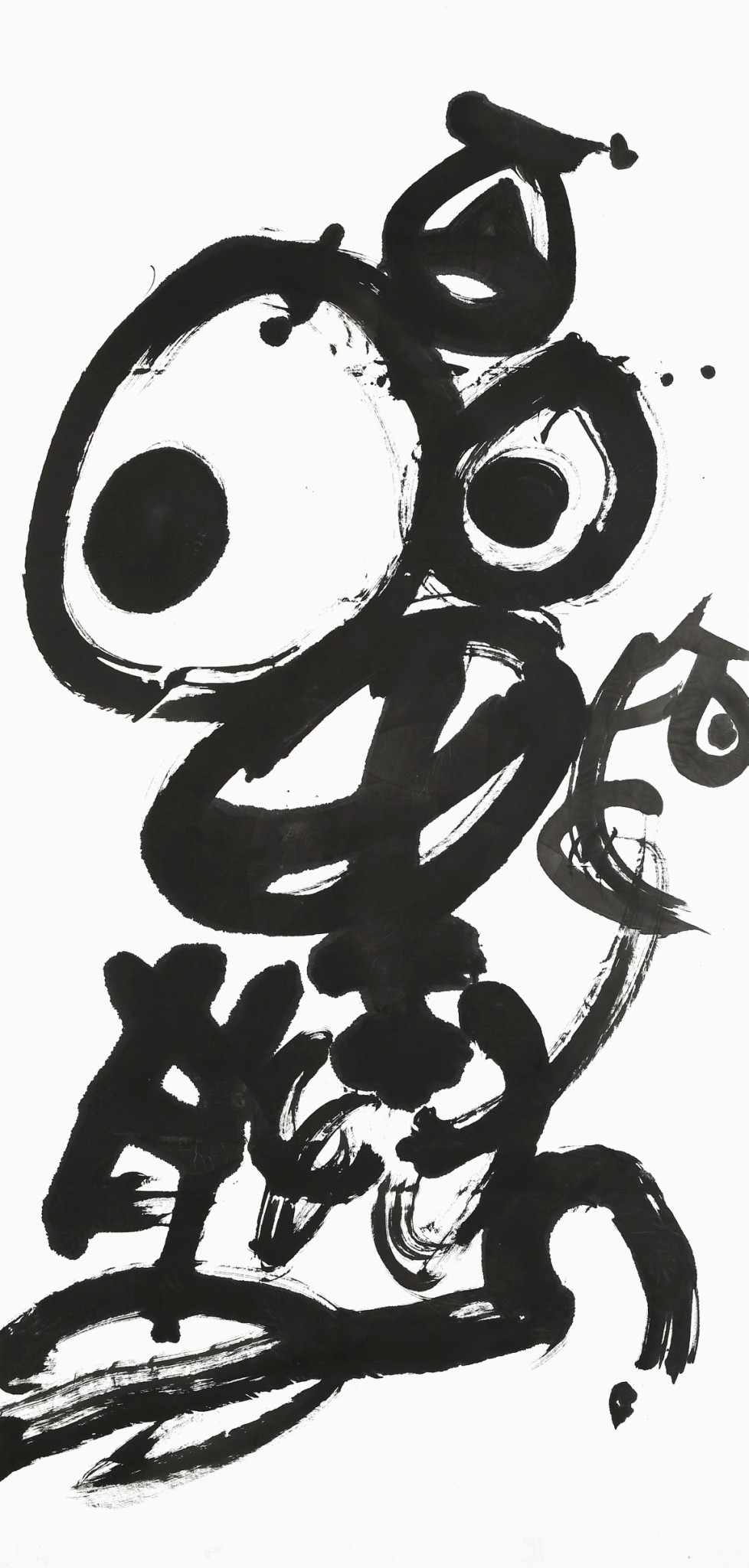
Fluid Boundaries explores how art traverses the shifting terrain between cultures, materials, and states of mind. The title evokes permeability rather than division—the space where opposites meet, merge, and transform. Featuring six artists from Taiwan and the Netherlands—Yang Chih-Fu (abstract painting), Yuma Taru (Atayal weaving), Cheng Hung-Yu (contemporary calligraphy), Lily de Bont (reverse weaving), Jan Maarten Voskuil (stretched-frame constructions), and Pascal van der Graaf (folded canvas reliefs)—the exhibition reflects on the interplay between reason and emotion, structure and flow, and tradition and transformation.
The early 20th-century Dutch De Stijl movement marked one of Europe’s most rigorous pursuits of rational order. Its leading figure, Piet Mondrian, articulated in Natural Reality and Abstract Reality (1919) and Dialogue on the New Plastic (1920) that the aim of Neo-Plasticism was to express the universal harmony of the cosmos through the structure of the vertical and the horizontal. “The new plastic expression,” he wrote, “should find its form in the abstraction of line and color—that is to say, in the straight line and the primary color.” For Mondrian, the vertical symbolized the spiritual, the horizontal the natural; their intersection formed the essential balance of the world. In contrast, the oblique and the curved represented “transition, instability,” and were therefore consciously excluded.
This faith in straight lines and equilibrium shaped the enduring temperament of Dutch modernism—rational, geometric, lucid, and restrained. Both Jan Maarten Voskuil and Pascal van der Graaf extend and deviate from this legacy: Voskuil reconstructs the stretcher with mathematical precision, turning the painting into a spatial architecture; van der Graaf folds the canvas, allowing the rigid rectangle to breathe and flow. Lily de Bont’s reverse weaving continues this dialogue through acts of tearing, reassembling, and revealing, transforming the structure of weaving—a symbol of feminine labor and order—into a reflection on fragility and resilience.
In contrast, the Taiwanese artists’ works respond to an Eastern lineage that integrates emotion and principle—what Chinese philosophy calls “using feeling to reach truth, letting qi move through form.” Since Zhuangzi, art in the Chinese tradition has pursued a harmony with nature rather than domination of it; from the Song dynasty onward, painters and calligraphers sought qiyun shengdong (vital resonance) and yizai bixian (intention before the brush), where form becomes the visible trace of inner rhythm.
Yang Chih-Fu’s abstract paintings breathe through layered brushstrokes and chromatic air; Cheng Hung-Yu’s calligraphy translates movement and breath into lines of energy detached from language; and Yuma Taru’s weaving, rooted in Atayal cosmology, intertwines ancestral memory, natural rhythm, and feminine wisdom—threads that connect the human, the spiritual, and the earthly.
In Fluid Boundaries, the linear and the curved, the rational and the intuitive, the Dutch and the Taiwanese no longer stand apart—they coexist as reflections of one another. These artists inhabit the border where structure dissolves into motion, and where cultural difference becomes creative resonance. Through lines, folds, and threads, they invite us to experience a world where boundaries do not confine but breathe.
Curators|Pascal VAN DER GRAAF, Arwen YANG
Support|The Netherlands Office Taipei